
So far we have looked at some men and their take on how a person is saved from the penalty of sin. I think it is also now fitting to take just a glimpse at some teaching from the Catholic church from the council of Trent.
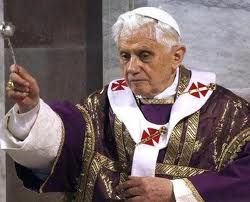
Individual salvation:
The Council of Trent describes the process of salvation from sin in the case of an adult with great minuteness (Sess. VI, v-vi).
“It begins with the grace of God which touches a sinner’s heart, and calls him to repentance. This grace cannot be merited; it proceeds solely from the love and mercy of God. Man may receive or reject this inspiration of God, he may turn to God or remain in sin. Grace does not constrain man’s free will.”
(Grace does not touch a person’s heart. The Holy Spirit through God’s Word convinces the sinner of their need and calls a person to repent (change their mind) and place their faith in Christ alone for salvation. This is how man can receive the gift of eternal life through Jesus Christ.)
Thus assisted the sinner is disposed for salvation from sin; he believes in the revelation and promises of God, he fears God’s justice, hopes in his mercy, trusts that God will be merciful to him for Christ’s sake, begins to love God as the source of all justice, hates and detests his sins.
(Disposition or inclination toward salvation is not natural to man that is sure. However, all that is needed is for the sinner to be shown the light of the truth from God’s Word – specifically the gospel concerning Jesus Christ. I Cor 15. I do not believe all the things listed above are relevant or necessary. Especially not loving God as the source of all justice and hating his sins. It strikes me as odd that Calvinists will as at times talk about needing to hate and detest one’s sins and be willing to turn from them. Maybe Augustine and Calvin borrowed this idea from the Catholic church? To be sure, it has more in common with Catholicism than it does with biblical free grace.)
This disposition is followed by justification itself, which consists not in the mere remission of sins, but in the sanctification and renewal of the inner man by the voluntary reception of God’s grace and gifts, whence a man becomes just instead of unjust, a friend instead of a foe and so an heir according to hope of eternal life. This change happens either by reason of a perfect act of charity elicited by a well disposed sinner or by virtue of the Sacrament either of Baptism or of Penance according to the condition of the respective subject laden with sin.
(Say what? So one must voluntarily receive God’s grace and gifts? Perform a perfect act of charity? Or be baptized? Or have an act of penance? Not according to the Bible.)
The Council further indicates the causes of this change. By the merit of the Most Holy Passion through the Holy Spirit, the charity of God is shed abroad in the hearts of those who are justified.
(Wait a minute. How did we become justified? I guess I missed that part.)
Against the heretical tenets of various times and sects we must hold that the initial grace is truly gratuitous and supernatural; that the human will remains free under the influence of this grace; that man really cooperates in his personal salvation from sin;
(Man does not cooperate in his personal salvation from sin. Christ has accomplished everything needed. Man just has to receive it by faith. That in no way means that he is adding anything of his own to salvation. Faith and grace are not something tangible and are not some sort of Aristotelian spiritual commodities.)
that by justification man is really made just, and not merely declared or reputed so;
(My understanding is that we are declared just and are clothed in Christ’s righteousness. We have no sin in the sense that Christ blood covers our sin in God’s sight.)
that justification and sanctification are only two aspects of the same thing, and not ontologically and chronologically distinct realities; that justification excludes all mortal sin from the soul, so that the just man is no way liable to the sentence of death at God’s judgment-seat.
(Having Christ’s blood as a sin covering and His imputed righteousness takes care of all sin of a person past, present, or future. No saved person is ever going to receive eternal punishment from God period.)
Other points involved in the foregoing process of personal salvation from sin are matters of discussion among Catholic theologians; such are, for instance, the precise nature of initial grace,
the manner in which grace and free will work together, the precise nature of the fear and the love disposing the sinner for justification, the manner in which sacraments cause sanctifying grace. But these questions are treated in other articles dealing ex professo with the respective subjects.
The same is true of final perseverance without which personal salvation from sin is not permanently secured.
(Wow, this sounds like Perseverance of the Saints to me. So evidently, eternal life does not mean much to a Catholic. In this system one does not know for sure if they are saved until they reach heaven… if the reach heaven. What a sad way to go through life when the Bible says that we can indeed know right now.)
What has been said applies to the salvation of adults; children and those permanently deprived of their use of reason are saved by the Sacrament of Baptism.
(This is another Catholic error. Water baptism has no power to save anyone. )
The whole point of all of this is to begin to see what kind of false teaching is out there. Also, not just any false teaching is important to recognize but that which is so easily and at time deceptively brought near to us. It is rather easy to spot atheism or cults but certain ideas passed on down from the Catholic Church or the Protestant Reformers of the Catholic Church or not always so easy to spot. Some of these include turning from sins for salvation, penance, faith plus anything else for salvation, infused initial grace or faith, and perseverance of the saints or Lordship salvation.
Doing this study has opened my eyes to how far reaching the problem has become. Men from the past that are usually held in Baptist circles as men of high regard like George Whitfield, Spurgeon, Jonathan Edwards, Adoniram Judson, William Carey, David Brainerd, along with many others have strict Calvinist and Reformed views. I’d have to suppose that they would be solidly aligned with the likes of John MacArthur, Paul Washer, and John Piper if they were alive today based different quotes that I came across.
My hope is that we as believers educate ourselves as to the truth and then also educate ourselves as to what possible errors might just be coming to you straight from preachers, teachers, authors, or personal friends.
In response to the wrong ways to obtain salvation, let’s consider Romans 4:3-5.
Rom 4:3 For what saith the scripture? Abraham believed God, and it was counted unto him for righteousness.
Rom 4:4 Now to him that worketh is the reward not reckoned of grace, but of debt.
Rom 4:5 But to him that worketh not, but believeth on him that justifieth the ungodly, his faith is counted for righteousness.
A lost sinner needing a Savior can believe the truth today and can trust Christ as Savior. From that moment forward they can know that they have eternal life. Not because of their works but because of Christ and His work on the cross, burial, and resurrection.
God Bless,
Jim F



 Stand For the Faith